
Starbucks turned a summer drink into a fundraising line this year. The Blue Coconut Refresher and Iced Blue Coconut Matcha launched on June 16 with blue spirulina colouring and a charitable pledge attached. For every cup sold through July 7, Starbucks said it would donate 25 cents to Water.org’s Get Blue initiative, capped at $975,000.
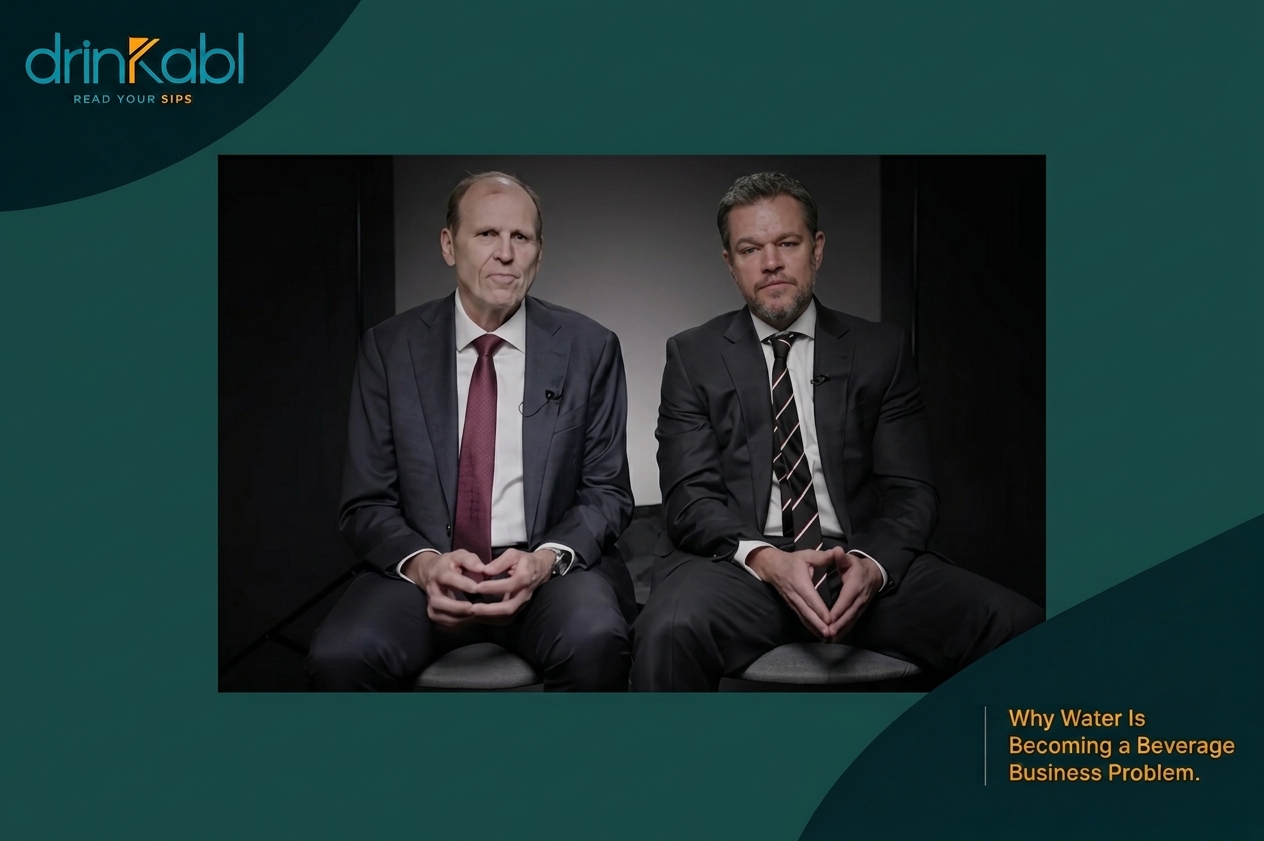
That figure looks small against the size of the problem. Water.org says 2.1 billion people still lack access to safe water, while 3.4 billion lack safe sanitation. Those numbers came from co-founders Matt Damon and Gary White themselves on a recent World Economic Forum podcast, where both men described the crisis in blunt terms.
The Bigger Point Is Money, Not Wells
White told the WEF’s Meet the Leader podcast that Water.org spent years drilling wells directly before realising charity alone would never close the gap at scale. Its answer became WaterCredit, a programme of small loans that lets households pay for their own water and sanitation connections instead of waiting for one to arrive. Water.org says the model has now reached more than 88 million people, with a 98% repayment rate and 90% of borrowers being women.
The insight behind it is commercial. White said many of the households Water.org serves were already paying for water, sometimes a quarter of their income, just without a reliable source. A loan replaces that daily cost with a fixed monthly one and eventually buys something permanent. White described a Ugandan grandmother known as Mama Florence, who used a $300 loan to sink a well and install a pump, then grew vegetables, raised pigs and started a brick business from the clay soil around her home.
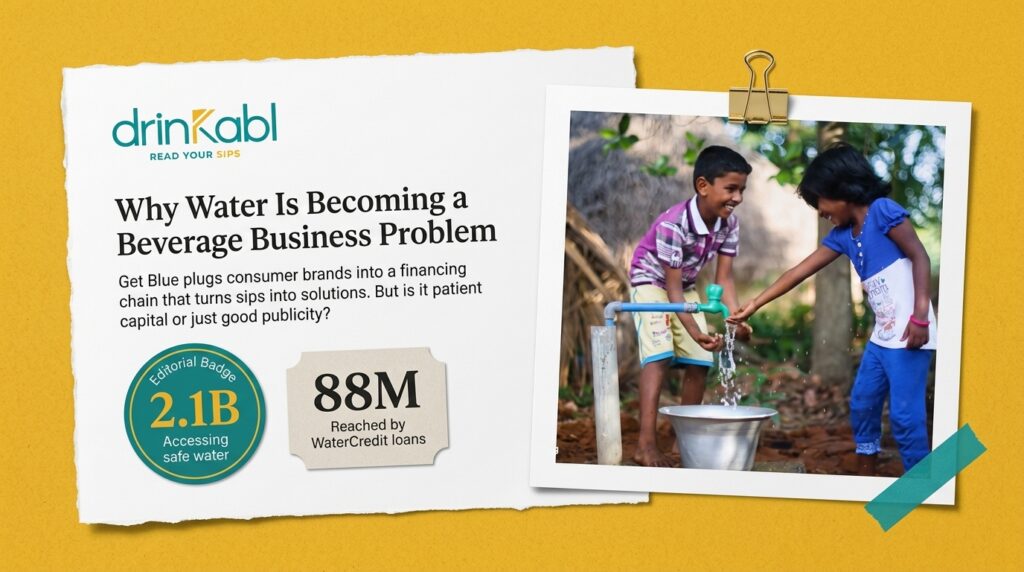
Get Blue Plugs Consumer Brands Into That Chain
Get Blue is Water.org’s attempt to connect consumer brands directly to that financing pipeline. The initiative launched at Davos in January, with Gap, Amazon, Starbucks and Ecolab as founding partners and a stated goal of reaching 200 million people by 2030. Water.org and Gap Inc. described it as a platform for treating water as a core commercial issue rather than a one-off donation. Starbucks’ Blue Coconut drinks were the first consumer product built specifically around the campaign.
This is not the beverage industry’s first cause-linked water campaign. Stella Artois partnered with Water.org back in 2015 on “Buy a Lady a Drink,” donating $1.2 million upfront and adding $6.25 per limited-edition chalice sold, with each chalice funding five years of clean water for one person. The brewer has since run the campaign in various forms for a decade, well beyond its original run. The idea itself has barely changed since 2015.
What Get Blue adds is shared plumbing: financing infrastructure that lets a beverage brand, a retailer and a logistics company draw on the same pipeline through Water.org instead of each building a standalone campaign. Whether that shared scale raises more money than Stella Artois managed alone is a question Drinkabl will be watching once Starbucks reports final numbers from the summer run.
Nigeria Already Has This Story, Minus the Branding
A version of this story is already playing out in Nigeria, just without the marketing. The Coca-Cola System in Nigeria, which includes Nigerian Bottling Company and The Coca-Cola Foundation, runs a Strengthening Water, Sanitation and Hygiene programme that has rehabilitated boreholes and handwashing facilities across six communities in Maiduguri, including one camp for displaced persons, reaching more than 16,000 people. Coca-Cola’s separate Africa Water Stewardship Initiative lists Nigeria among 20 countries where it is investing nearly $25 million through 2030 to fund watershed protection and community water access. Neither programme is packaged as a consumer-facing campaign the way Get Blue or Buy a Lady a Drink are.
That gap is worth sitting with. Nigerian beverage manufacturers already have an operational reason to care about water access, since it is an ingredient, a processing input and, near some bottling plants, a source of real community tension over allocation. What none has built publicly is a mechanism that turns a bottle or a can into a funding line the way Starbucks and Stella Artois have. Whether that model even translates to Nigerian retail economics, where margins and price points sit well below a Starbucks refresher, remains an open question, one tangled up in how bottled water brands price and position themselves locally.
The Harder Question Underneath It All
A quarter added to a coffee or six dollars for a chalice raises awareness and, at scale, real money. But $975,000 is a rounding error against a crisis affecting 2.1 billion people. Consumer campaigns typically end when the marketing calendar moves on, and Water.org’s own model survives that problem by recycling loan repayments into new loans rather than leaning on fresh donations each year.
The test for Get Blue, and for any beverage brand tempted to copy it, is whether the consumer money becomes patient capital or just a summer’s worth of good publicity.