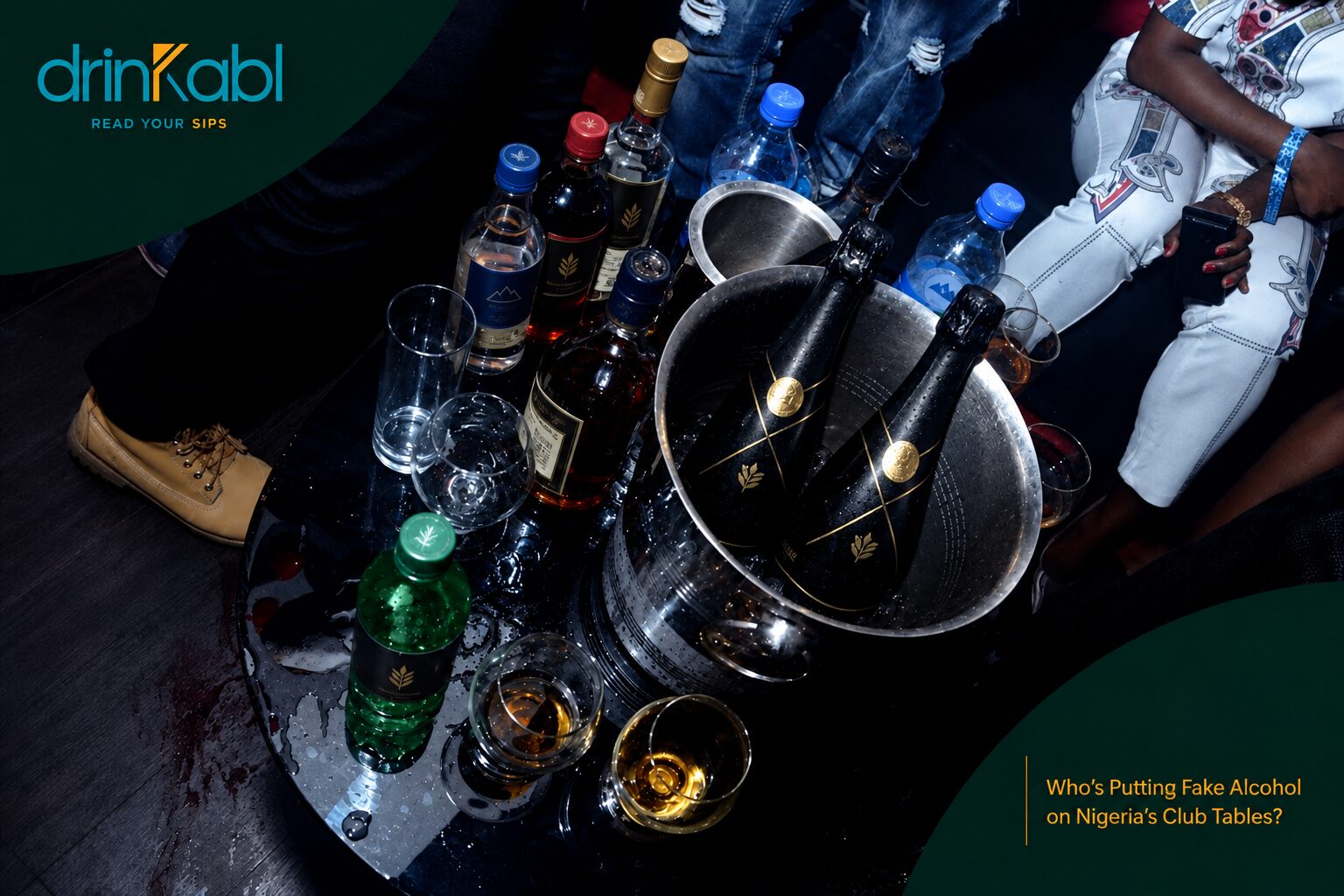

A consumer who orders a bottle of whisky, vodka or cognac at a licensed Lagos nightclub assumes the price guarantees authenticity. Evidence from Nigeria, Kenya and Uganda suggests that assumption does not always hold, and that nightlife venues may be functioning as an under-examined last-mile channel for counterfeit alcohol.
The available evidence does not support a blanket claim that Nigerian clubs routinely sell fake drinks, nor does every reported illness after a night out prove a bottle was counterfeit. But regulators have repeatedly seized counterfeit alcohol manufactured and packaged in Nigeria, genuine bottles have been found refilled with fake contents, and Lagos authorities have specifically warned clubs and restaurants to be vigilant. Consumers and bartenders have separately described suspected counterfeit products reaching lounges and tables. Together, that points to a largely invisible stretch of the supply chain: the journey from illicit producer or compromised supplier to the nightclub table.
What consumers and bartenders are describing
Education-technology expert Gabriel Egunjobi told PUNCH he fell seriously ill after his group bought a ₦260,000 bottle of vodka at a Victoria Island club, and that the venue later apologised, saying it too had been a victim of counterfeit supply. That account is not laboratory proof of what was in the bottle, but it raises the more useful question: if the club’s explanation was accurate, how did a counterfeit bottle enter its supply chain at all?
A bartender identified as Bankole, with 16 years in the trade, told the same outlet that at a previous job near Elegushi Beach, as many as seven bottles in a carton of 12 were sometimes fake, a pattern he linked to venues that bought outside manufacturer or certified-dealer channels. Another bartender at the same establishment said his employer bought directly from the company and avoided roadside vendors. The contrast points to procurement as one of the more consequential variables in whether a venue’s stock is genuine.
Regulators have named nightlife as a risk point
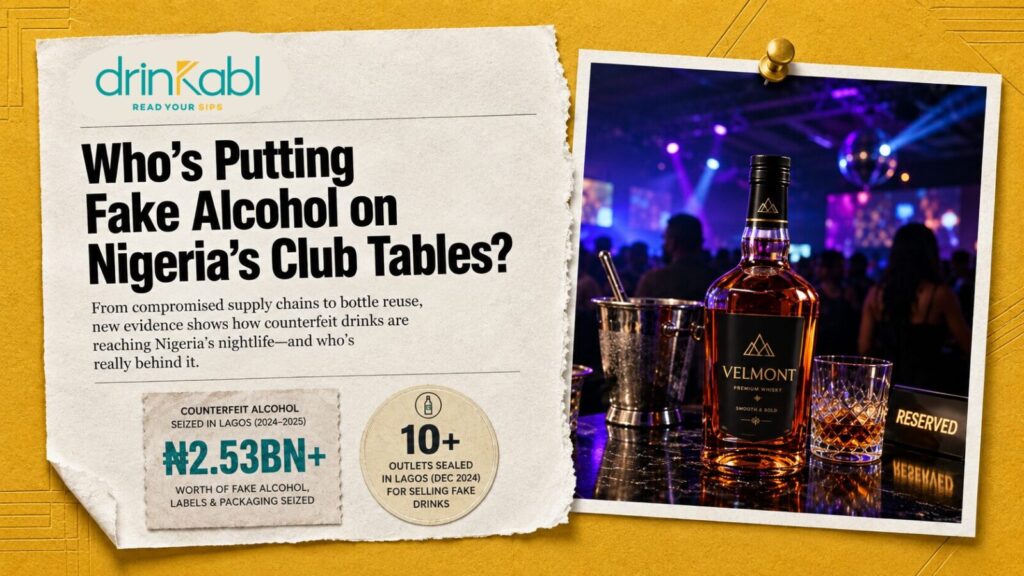
In January 2024, the Lagos State Government warned entertainment venues about counterfeit drinks circulating in clubs and restaurants, told operators to exercise due diligence on their purchases, and said venues caught selling fake drinks could be shut down or lose their licences. That December, the nightclub Quilox partnered with NAFDAC on a campaign against fake drinks in nightlife venues. Quilox’s chief operating officer, Akinlabi Peller, said the club sourced from manufacturers or approved suppliers, marked bottles with its own serial numbers, and disposed of empty bottles to stop them being reused by counterfeiters. NAFDAC officials said the agency had sealed more than ten outlets that December alone for selling fake drinks.
That system points to the two weak spots regulators and operators keep circling back to: where a venue sources its stock, and what happens to a genuine bottle once it’s empty.
Genuine bottles, fake contents
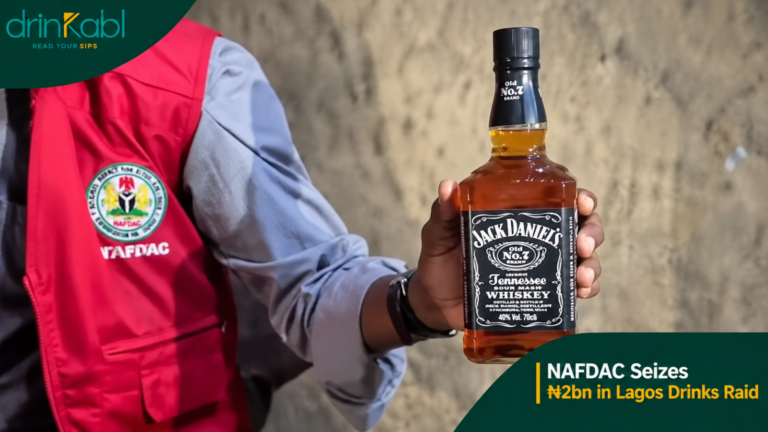
NAFDAC’s enforcement record shows the problem is not hypothetical. In December 2024, the agency raided a production operation at Oke Arin Market on Lagos Island and seized counterfeit alcohol worth more than ₦180 million. The principal suspect, Tochukwu Henry, reportedly confessed to refilling bottles labelled Rémy Martin with ST-Rémy contents. A month earlier, NAFDAC dismantled illegal packaging operations in Abule-Osun, Lagos, confiscating more than 50,000 counterfeit branded labels and packaging materials worth roughly ₦2 billion. In April 2026, the agency shut two more production sites in Lagos and recovered over 1,800 cartons of counterfeit and adulterated alcohol worth about ₦350 million, and in May 2026 it arraigned a Lagos trader over alleged counterfeit versions of Johnnie Walker Red Label, Flirt Vodka, Lords Gin and Gordon’s Dry Gin; the defendant pleaded not guilty.
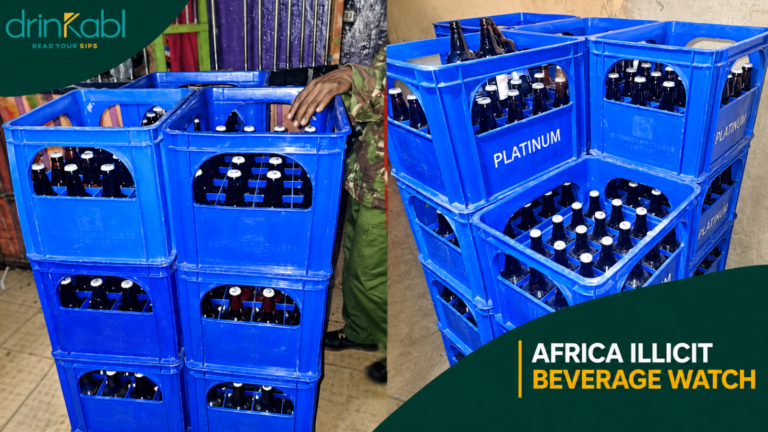
The pattern that connects these cases is bottle reuse. A branded bottle carries its own credibility, and a counterfeiter who can obtain genuine empty bottles, labels and caps doesn’t need to replicate a distillery to sell a cheap substitute at premium prices. Kenya’s Anti-Counterfeit Authority flagged the same tactic in a May 2026 submission to the country’s National Assembly, identifying refilled genuine bottles as one of its harder enforcement challenges. A Nigerian bartender interviewed by PUNCH made the same point directly: scanning an original bottle doesn’t confirm what’s actually inside it.
Beyond Nigeria: what Uganda and Kenya show
Reporting from Uganda suggests the problem can extend beyond supply-chain contamination into the venue itself. Daily Monitor investigated allegations in Kampala’s high-end pubs in May 2024, quoting bar promoter Maxim Kizito, who alleged some establishments knowingly served counterfeit liquor to customers distracted by the nightlife experience. A waitress in Entebbe alleged that some venues serve a genuine spirit when a customer first arrives, then substitute a cheaper liquid once the customer is intoxicated. These remain allegations rather than confirmed findings, but they describe a distinct failure point beyond a compromised supplier: deliberate substitution at the point of sale.
Kenya offers the clearest picture of what the problem looks like at scale. A 2025 Euromonitor study for the Alcoholic Beverages Association of Kenya, drawing on 50 outlet visits and a survey of over 1,000 consumers, estimated illicit alcohol accounted for 60% of alcohol sold in the country, costing the government roughly KSh120 billion a year, with counterfeit and fake brands alone responsible for about KSh64 billion of that loss. Kenya’s police recorded 691,586 litres of illicit brew impounded and 28,862 arrests in 2024, spanning manufacturers, distributors, retailers and consumers, a spread that shows production is only one link in the chain. In February 2026, Kenya’s Anti-Counterfeit Authority held a roundtable with the Bar, Hotel and Liquor Traders Association, which represents about 54,000 members, to discuss supply-chain monitoring, staff training and refilled-bottle risks, treating hospitality venues as frontline partners rather than just retail outlets.
Separating the categories
Not every illegal bottle is the same problem. Counterfeit alcohol imitates a genuine brand; adulterated alcohol has been altered or contaminated after production; smuggled alcohol crosses borders outside legal channels but may be genuine; unregistered alcohol simply lacks regulatory approval. A smuggled bottle can be authentic, a counterfeit one can be made locally, and an adulterated drink can carry a real label. Nigerian reporting on this issue would benefit from specifying which category applies in each case, rather than folding everything under “fake drinks.”
The questions still unanswered
Public accounts of Nigerian nightlife raising health complaints, including entertainer Freedom Atsepoyi and music executive Soso Soberekon, who both said they were hospitalised after drinks they believed were fake, remain first-person allegations rather than confirmed cases; illness after drinking has multiple possible causes, and none of these accounts cite a lab result. What’s missing from the public record is more basic: how many Nigerian clubs have actually been found selling counterfeit alcohol, how many suspect bottles have been tested rather than just complained about, how often clubs turn out to be victims rather than participants, and where empty premium bottles go once they leave a venue. A serious follow-up investigation would request NAFDAC’s inspection, seizure and prosecution data specifically tied to nightlife venues from 2020 to 2026, and compare it against nightclub density and distributor networks to see whether venues are a major distribution channel, an occasional victim, or simply the most visible part of a larger illicit market.
The bottom line
Counterfeit and illicit alcohol is a documented problem in Nigeria, and nightlife venues have been specifically flagged by Lagos authorities and drawn into NAFDAC’s own enforcement campaigns. What hasn’t been established is the scale of the nightclub piece of that trade; there is no public figure showing what share of nightclub alcohol is fake, and no basis for assuming Nigerian clubs generally sell counterfeit drinks. There is, however, enough evidence connecting compromised procurement, bottle reuse and a functioning counterfeit-production ecosystem to justify asking where every bottle on a club table actually came from, and who can prove it.